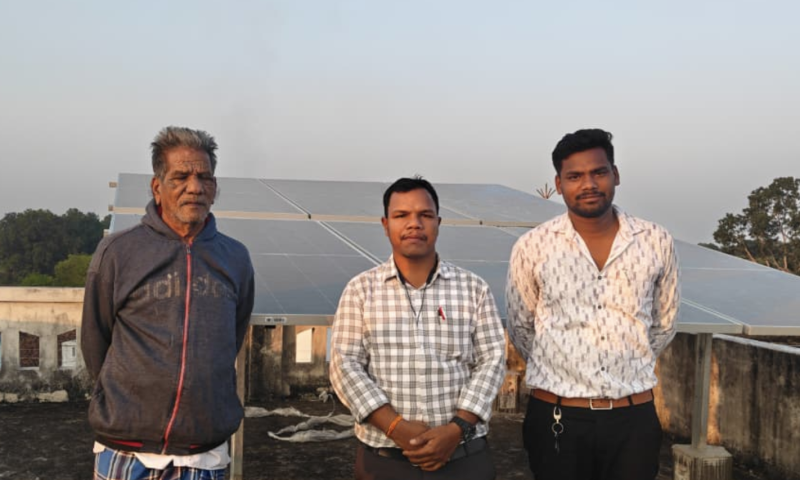
The Pradhan Mantri Surya Ghar Yojana, launched by the government to promote energy self-reliance, is emerging as a major boon for rural households. A notable example is Dhelu Das, a resident of Piplakachhar village in Khairagarh district, who has set a new benchmark by installing a 3-kilowatt solar rooftop plant at his residence.
Within just one month of installation, the solar plant generated 298 units of electricity, significantly reducing his dependence on conventional power. As a result, Dhelu Das’s monthly electricity bill has dropped by nearly 80 percent, while surplus power generation has also begun generating additional income.
According to official data, out of the total 298 units generated in November, 255 units were exported to the power grid, earning him a solar rebate of ₹517. Consequently, his average monthly electricity bill, which earlier stood at around ₹800, has now come down to just ₹160. Dhelu Das said the scheme has provided him with dual benefits—permanent relief from high electricity bills and additional income through surplus power generation.
Under the Pradhan Mantri Surya Ghar Yojana, substantial subsidies are being provided for installing rooftop solar plants. For plants of 3 kilowatts or above, beneficiaries receive ₹78,000 from the Central Government and ₹30,000 from the State Government, amounting to a total assistance of ₹1.08 lakh.
Encouraging other citizens to adopt solar energy, Dhelu Das said that if every household embraces solar power, the entire state can become energy self-reliant. The scheme, he added, is truly empowering common citizens both economically and environmentally.