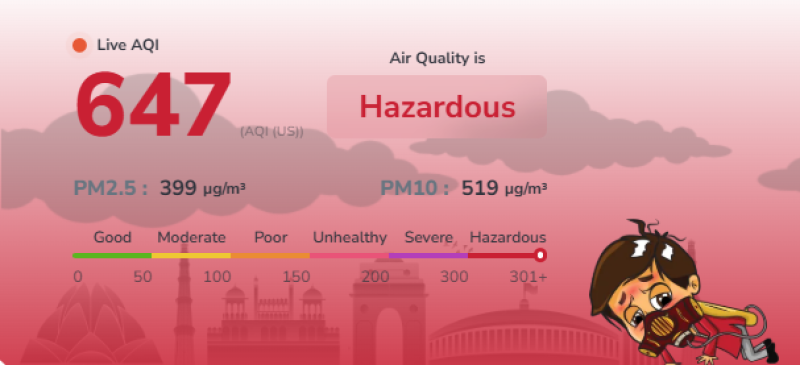
Delhi’s air pollution crisis intensified sharply on Monday as Dhirpur village in North Delhi recorded an alarming Air Quality Index (AQI) of 647, placing it deep in the ‘Hazardous’ category, according to real-time air quality monitoring data updated at 2:00 PM local time.
The readings show PM2.5 levels at 399 µg/m³ and PM10 at 519 µg/m³, far exceeding safe limits and indicating extremely dangerous air conditions. Health experts warn that prolonged exposure at such levels can trigger severe respiratory distress, cardiovascular complications, and heightened risk for vulnerable groups.
The spike comes amid persistent dense smog, cold weather, and stagnant wind conditions, which have trapped pollutants close to the ground across Delhi-NCR. The region remained overcast through the day, with temperatures around 18°C, humidity at 64 percent, and wind speeds of 12 km/h, offering little relief or dispersion of pollutants.
Localised Hotspots Emerging
While Delhi’s overall AQI remained in the ‘Severe’ range, Dhirpur’s hazardous reading highlights how certain pockets are facing disproportionately worse air quality. Environmental analysts point to local emissions, traffic density, and low air movement as key contributors to such extreme pollution concentrations.
Public Health Advisory
Medical professionals have advised residents to avoid outdoor activity, wear N95 masks if stepping out is unavoidable, and keep doors and windows closed. Schools, senior citizens, children, and people with asthma or heart conditions are particularly at risk under current conditions.