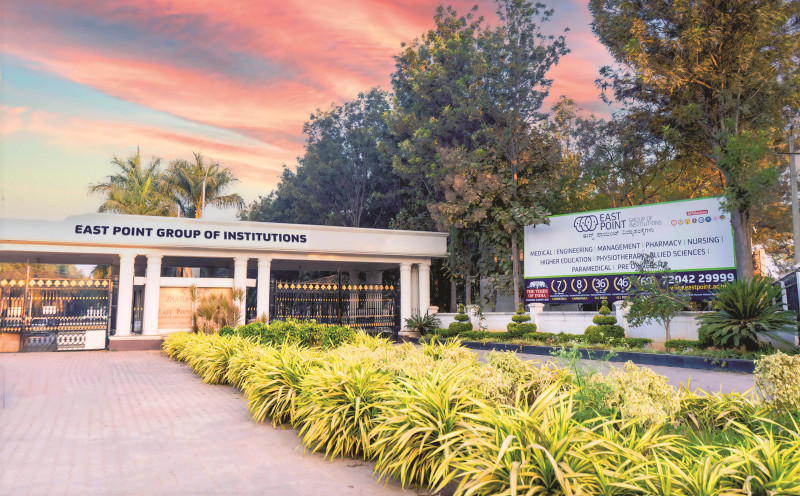
Bengaluru, July 03, 2026 – In a significant step toward combining Artificial Intelligence with healthcare and wellness, students from the Department of Computer Science & Engineering at East Point College of Engineering & Technology (EPCET), Bengaluru, have developed an innovative “AI-Powered Nutrition System for Enhanced Dietary Monitoring and Health Promotion” aimed at helping users make healthier and more informed dietary choices.
Developed by students Anshuman Kumar, Ashirbad Sai, Inderbir Singh, and Vyshnavi V under the guidance of Dr. Manimozhi Iyer, Head of the Department, CSE, the project leverages advanced technologies such as Convolutional Neural Networks (CNNs), Natural Language Processing (NLP), and Computer Vision to analyze food images and generate personalized nutritional insights in real time.
The AI-powered system allows users to upload food images through a mobile application, following which the platform identifies dishes, recognizes ingredients, evaluates food freshness, and provides nutritional breakdowns including calorie count, macronutrient composition, and personalized dietary recommendations. The system also integrates trusted nutritional databases such as Nutritionix and USDA to improve the accuracy of dietary analysis.
According to the student team, the project was inspired by the growing prevalence of lifestyle-related health issues such as obesity, diabetes, and nutritional imbalance, along with the increasing need for accessible dietary awareness tools. The students aimed to create a smart AI-driven nutrition assistant capable of simplifying nutrition tracking using just food images captured through a mobile device.
The system was trained and tested on a dataset of more than 10,000 food images covering multiple food categories and regional dishes. During internal evaluation and controlled testing, the solution achieved nearly 90% overall accuracy in identifying food items and generating nutrition insights, while reporting high performance in dish detection, ingredient recognition, and freshness analysis. The prototype was also tested with a limited group of students, faculty members, and volunteers, who appreciated the ease of use and instant nutrition feedback offered by the application
Speaking about the project, Dr. Manimozhi Iyer, Head of the Department, CSE, EPCET, said: “The project reflects how emerging technologies like AI and computer vision can be applied to solve everyday healthcare and wellness challenges. It is encouraging to see students develop practical and socially impactful innovations that promote healthier lifestyle choices.”
The students highlighted that while the system has demonstrated promising results at the prototype stage, further real-world validation and clinical testing would be required before deployment for medical or healthcare advisory purposes. The application is currently intended for educational and general wellness use and is not a substitute for professional medical advice.