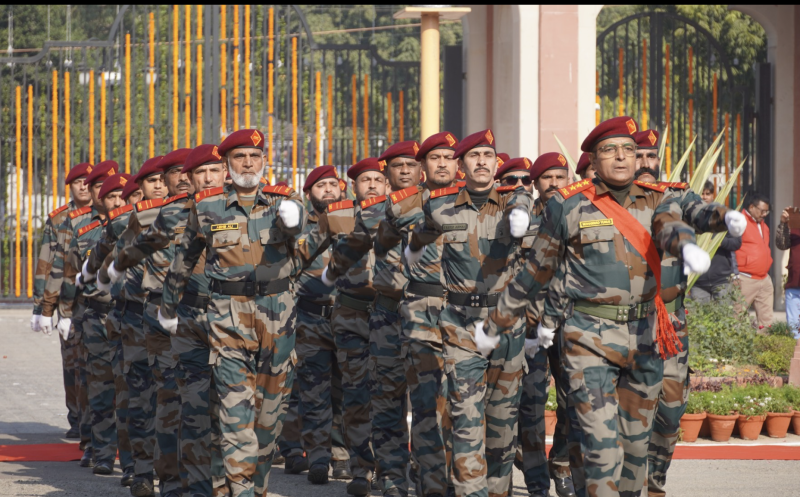
Jamia Millia Islamia (JMI) today celebrated the 77th Republic Day of India with tremendous enthusiasm and patriotic fervor, in resonance with the theme of the 150th anniversary of the ‘Vande Mataram’, honoring the national song. Prof. Mazhar Asif, Vice-Chancellor, Jamia Millia Islamia, and Prof. Md. Mahtab Alam Rizvi, Registrar, JMI unfurled the National Flag at the forecourt of Dr. M.A. Ansari Auditorium followed by the singing of the National Anthem, marking the adoption of the Constitution in 1950.
The ceremonial proceedings included Tilawat-e-Quran with translation and the soulful rendition of the Jamia Tarana. A grand and impressive parade by the NCC Cadets and the University Security Staff added to the patriotic spirit and solemnity of the occasion.
Prof. Neelofer Afzal, Dean Students’ Welfare, JMI, delivered the welcome address and highlighted the significance of the day and the values enshrined in the Constitution of India. The University’s Annual Magazine was also formally released on the occasion.
In his address, Prof. Md. Mahtab Alam Rizvi, Registrar, JMI, Prof Rizvi reflected on India’s freedom struggle, highlighting the adoption of the resolution for attaining 'Poorna Swaraj' and the nation’s liberation from the stranglehold of British colonial rule by moving towards attaining self-rule. Prof Rizvi also emphasized the remarkable effort behind the drafting of the Constitution under the chairmanship of Dr. Bhimrao Ramji Ambedkar, noting that the members of the Constituent Assembly deliberated clause by clause for two years, eleven months and seventeen days to give to the people of India, one of the finest constitutions in the world. Prof Mahtab Alam Rizvi added, "The Constitution guarantees equal rights to all citizens, irrespective of their caste, creed, religion, region, language, ethnicity, or gender, and affirms that in India, 'power rests with the people'". Explaining how the Constitution strengthens democracy, he elaborated on the core values of social justice, liberty, equality, and fraternity enshrined within it.
Underscoring the founders of JMI’s refusal to compromise with British rule in the 1920s, he described JMI as a shining example of an institution that embodies India’s foundational values of inclusivity, diversity, unity, cultural plurality, social justice and patriotism and upholds the values enshrined in the Constitution in letter and spirit. In keeping with that spirit and resolve, Prof Rizvi said that JMI stood with the nation and reminded the students about the importance of the tricolour and the concept of nationalism.