New Delhi, January 30, 2026
Two national consultative workshops on the Indian Council of Social Science Research (ICSSR)-sponsored longitudinal research project focusing on the tea plantation industry of India were inaugurated on January 28, 2026, at Jamia Millia Islamia, bringing together academicians, researchers, policymakers, and subject experts to deliberate on the historical and contemporary dimensions of the tea plantation industry of the country.
The National Consultative Workshops organized around the themes of "Tea Plantation Industry: Exploring Possibilities and Trajectories" and "Tool Development and Finalization" were conducted as part of the pre-fieldwork engagement of the project team. The Department of Educational Studies has been awarded the ICSSR longitudinal research grant as part of ICSSR’s mandate of working in the social sciences sector to empower the disadvantaged and marginalized groups.
The ceremonial proceedings during the inaugural function included Tilawat-e-Quran with translation by Dr. Tarique Anwar. This was followed by a soulful rendition of the Jamia Tarana by Mr. Zeeshan and his team. Prof. Aejaz Masih, Head of the Department, welcomed the invited dignitaries and keynote speakers with the traditional Assamese “gamosas,” symbolizing the cultural heritage and hospitality of Assam.
Project Coordinator, Dr. Quazi Ferdoushi Islam, shared the background, objectives, and significance of the workshop, outlining its focus on the tea plantation industry and expected outcomes of the workshop.
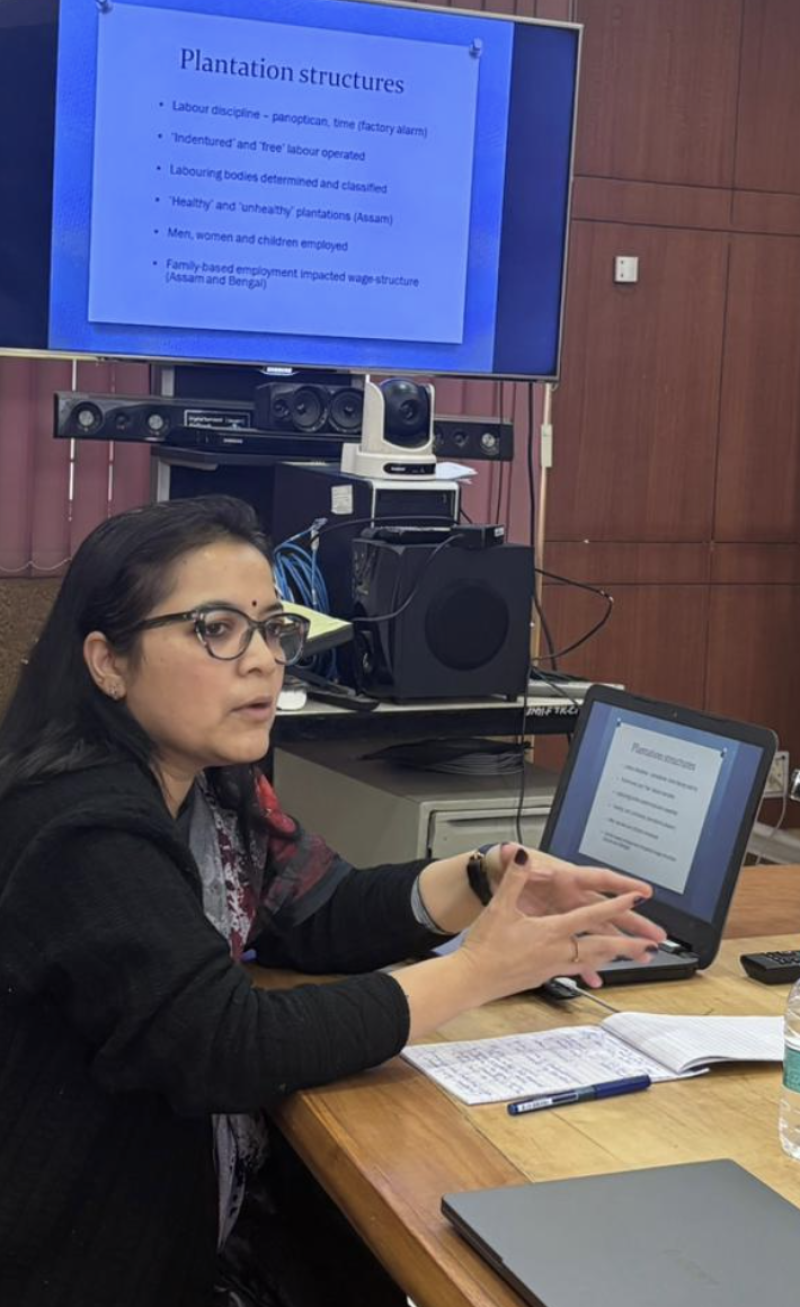
The National Consultative Workshops are aimed at focusing on an overview of the plantation economy in India, historical dimensions of plantation labour, socio-economic conditions of plantation workers, and welfare schemes through human development in tea plantation regions along with technological interventions and the future of the plantation economy and labor welfare through shifting trends in the labor economy, among other issues. The tool development and finalization process focused on understanding the methodological issues (focus areas of tool dimensions, field permissions and clearances, ethics involved in data collection, etc.) in studying plantation societies like tea through panel dialogues and discussions.
The first keynote was delivered on the theme “Tea Garden Communities and ICSSR’s Social Developmental Agenda in the context of India’s Development Aspirations.” The speaker, Prof. Manoj Kumar Saxena, Senior Professor, Central University of Himachal Pradesh, dwelled on the significance of ICSSR’s role in advancing socially relevant research and aligning social science scholarship with national development priorities, particularly in relation to inclusive growth, labour welfare, and sustainability in plantation economies. The speaker also spoke on the social development perspectives under the ICSSR perspectives.
Prof. Virginius Xaxa delivered the keynote pertaining to the historical evolution of tea labour in Assam. The address emphasized the historical evolution of the plantation sector, its contribution to regional development, and labour recruitment processes, migration patterns, and the socio-cultural and economic conditions of tea labourers across different periods.
The keynote sessions provided a strong conceptual foundation for the workshop and emphasized the need for continued dialogue between and among different stakeholders, interdisciplinary research, and policy engagement on plantation economies and tea labour issues.
In his presidential address, the Vice-Chancellor, JMI, Prof. Mazhar Asif, emphasized that tea is a legacy not only to Assam but also to India, and its product is deep-rooted in the Indian soil. Prof. Asif highlighted the importance of the tea plantation industry in India’s socio-economic context and underscored the need for evidence-based research for the welfare of the tea labour communities.