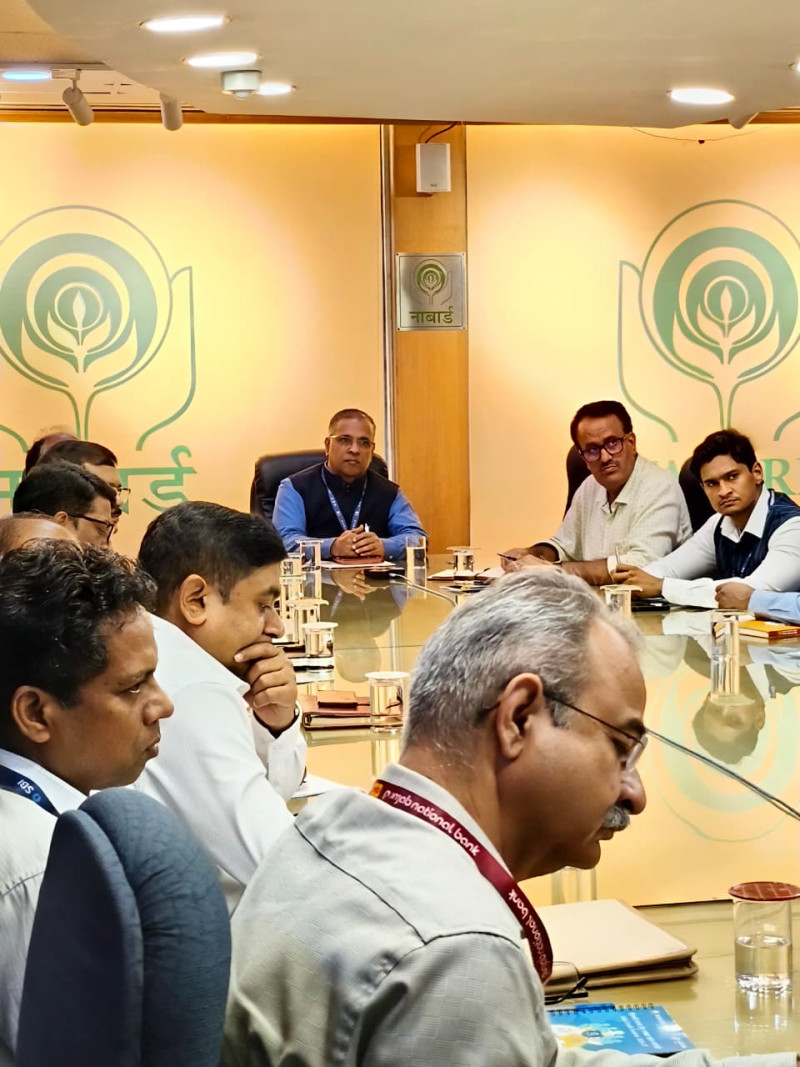
New Delhi, 3 July, 2026: In a significant step towards strengthening investment credit for agriculture and allied sectors, the State Level Unit Cost Committee (SLUCC) for the Financial Year 2026-27, convened by NABARD, approved revisedunit costs and the inclusion of several new investment activities under the State Unit Cost framework for the National Capital Territory of Delhi.
The meeting was held at the NABARD New Delhi Regional Office under the chairmanship of Shri Samir Athalye, Deputy General Manager & Officer-in-Charge (OIC). Representatives from the Reserve Bank of India (RBI), State Level Bankers' Committee(SLBC), Govt of NCT Delhi, Lead District Managers (LDMs) from all districts of Delhi, Krishi Vigyan Kendra (KVK), Ujwa, Delhi State Cooperative Bank (Delhi StCB), and other key stakeholders participated in the deliberations.
Addressing the gathering, Shri Samir Athalye underscored the critical role of scientifically determined unit costs in facilitating timely and adequate institutional credit for farmers and rural entrepreneurs. He stated that NABARD, as theapex development financial institution for agriculture and rural development, prepares these unit costs through an extensive consultative process involving banks, State Govt Department, technical institutions, and other stakeholders. The unit costs serve asbenchmark estimates for financing investment projects, enabling banks to extend credit for productive asset creation while ensuring financial viability.
He further emphasized that the annual revision of unit costs is essential to keep pace with changing market prices, technological advancements, and evolving production practices. Updated unit costs help ensure realistic project financing,preventing both over-financing and under-financing while encouraging sustainable and economically viable investments in the farm and allied sectors.
The Committee carried out a comprehensive review of existing unit costs through sector-wise presentations covering a wide range of farm and allied activities. The discussions reflected active participation from all stakeholders, who sharedfield-level experiences and practical recommendations to improve the relevance of the unit cost norms.
Based on the deliberations, the Committee approved the rationalization of several existing unit costs to better align them with prevailing market conditions. It also endorsed the inclusion of a number of emerging investment activities underthe State Unit Cost framework, thereby creating new opportunities for institutional finance and promoting innovation, diversification, and entrepreneurship in the agricultural sector.
The meeting concluded with a reaffirmation of NABARD's commitment to promoting a robust agricultural credit ecosystem through evidence-based planning, stakeholder consultation, and periodic updation of unit costs, thereby supporting sustainableagricultural growth and rural prosperity in the National Capital Territory of Delhi.