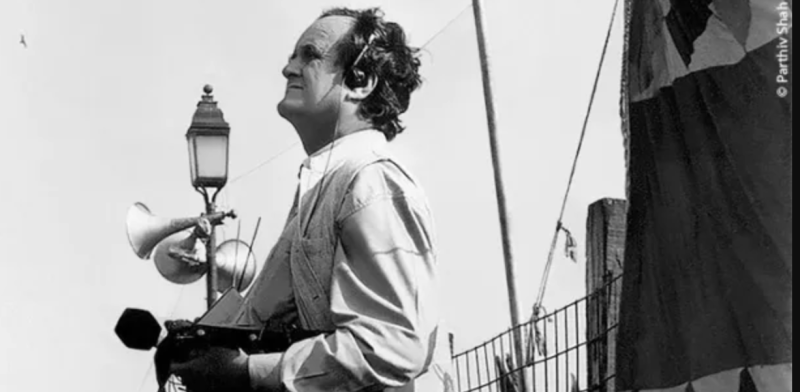
Sir William Mark Tully, KBE—one of the most influential foreign journalists to document post-Independence India and a former Bureau Chief of the BBC in New Delhi—passed away on Sunday at a hospital in the capital. He was 90.
Tully served with the BBC for nearly three decades, including 20 years as its India Bureau Chief, shaping global understanding of South Asia through some of the region’s most turbulent political and social moments. Known for his deep engagement with Indian society, politics, and religion, he remained based in New Delhi long after resigning from the BBC in 1994.
Early Life and Education
Born on October 24, 1935, in Tollygunge, Calcutta, during the British Raj, Tully spent his early childhood in India before being sent to boarding school in Darjeeling and later educated in England. He studied at Twyford School, Marlborough College, and Trinity Hall, Cambridge, where he read Theology.
Although he briefly trained for the Anglican priesthood at Lincoln Theological College, he left after two terms, later acknowledging doubts about religious vocation and personal identity.
A Defining Journalistic Career
Tully joined the BBC in 1964 and returned to India in 1965 as its correspondent. Over the next three decades, he reported on nearly every major turning point in modern Indian history, including:
Indo-Pakistan wars
The Emergency (1975–77)
Operation Blue Star and the assassination of Indira Gandhi
The Bhopal gas tragedy
The assassination of Rajiv Gandhi
The demolition of the Babri Masjid in 1992
During the Emergency, Tully was expelled from India for his reporting and allowed to return only shortly before democratic rule was restored. While covering the Babri Masjid demolition, he was briefly detained by rioters amid chants of “Death to Mark Tully,” an incident that underscored the hostility faced by foreign journalists at the time. He later described the demolition as independent India’s “greatest setback” to secularism.
He resigned from the BBC in July 1994 following a public disagreement with then Director-General John Birt, accusing the leadership of fostering a culture of fear and centralisation. After leaving the corporation, Tully continued as a freelance journalist, author, and broadcaster based in New Delhi.
He also presented notable BBC programmes, including Great Railway Journeys and World Steam Classics, reflecting his lifelong passion for railways. Until 2019, he was the regular presenter of BBC Radio 4’s Something Understood.
Author and Interpreter of India
Tully authored nine books, many of which are regarded as essential reading for understanding India’s political and social fabric. His notable works include:
Amritsar: Mrs Gandhi’s Last Battle (1985), co-authored with Satish Jacob
No Full Stops in India (1988)
India in Slow Motion (2002), with Gillian Wright
Upcountry Tales: Once Upon a Time in the Heart of India (2017)
His writing was widely praised for combining journalistic rigour with empathy and cultural insight, particularly his ability to engage with rural India beyond metropolitan narratives.
Public Engagement and Beliefs
Fluent in both English and Hindi, Tully frequently spoke on religion, pluralism, and national identity. Addressing the Bangalore Initiative for Religious Dialogue in 2010, he reflected on India’s long tradition of religious coexistence, arguing that lived experience had taught him there were “many ways to God.”
He was also patron of the UK chapter of Child in Need India (CINI UK) and an active supporter of literary and cultural forums, including the Kalinga Literary Festival.
Personal Life
Tully married Margaret in 1960 and had four children. Later, he lived in India with journalist and collaborator Gillian Wright. He held an Overseas Citizenship of India, reflecting his enduring personal and professional commitment to the country he covered for most of his life.
Awards and Recognition
Over the years, Tully received numerous honours in both the UK and India, including:
Officer of the Order of the British Empire (OBE), 1985
Padma Shri, 1992
Knight Commander of the Order of the British Empire (KBE), 2002
Padma Bhushan, 2005
BAFTA Lifetime Achievement Award, 1985
Legacy
Sir Mark Tully leaves behind a body of work that continues to shape how India is understood beyond its borders. Neither a distant observer nor an uncritical insider, he occupied a rare space—earning respect for his independence, intellectual honesty, and long-term engagement with the country he called home.
He is survived by his children and extended family.