

New Delhi, April 26, 2026: The Union Cabinet has approved a ₹2,584.60 crore Small Hydropower Development Scheme aimed at adding 1,500 MW of new capacity across India between FY 2026–27 and FY 2030–31, in a move to strengthen energy security and accelerate the country’s clean energy transition.
The scheme focuses on promoting small hydropower projects with capacities ranging from 1 to 25 MW, particularly in hilly and northeastern regions where untapped potential remains high but access to reliable electricity is still a challenge. By enabling decentralized power generation, the initiative aims to improve energy access in remote and underserved areas while reducing dependence on conventional fuels.
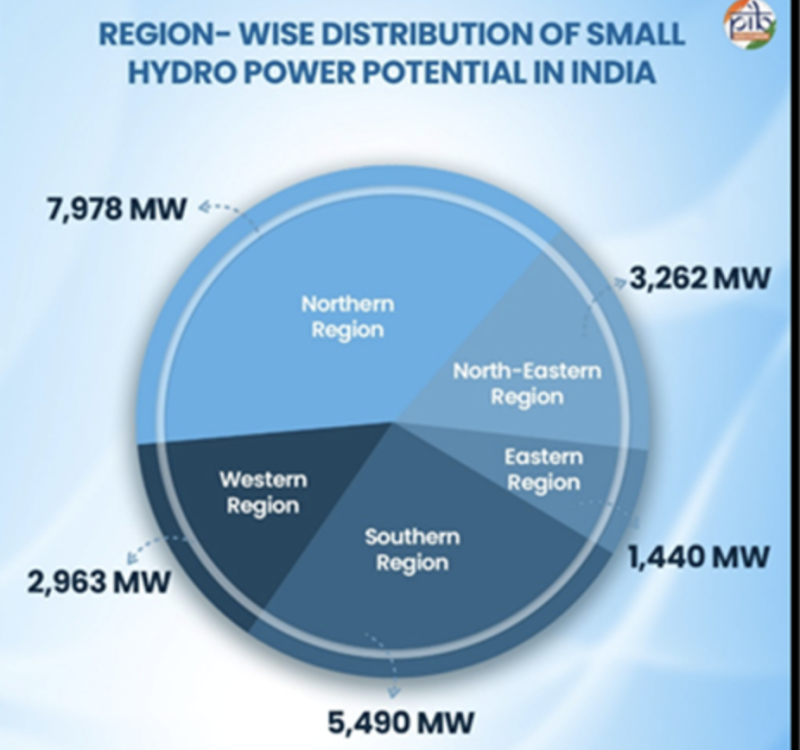
India currently has an estimated small hydropower potential of 21,133.61 MW across 7,133 identified sites. Of this, around 5,171 MW—nearly 24.5%—has been utilized so far, leaving significant scope for expansion. The newly approved scheme is expected to unlock part of this remaining capacity through targeted financial and policy support.
Under the financial assistance structure, projects in northeastern states and border districts will receive support of up to ₹3.6 crore per MW or 30% of project cost, capped at ₹30 crore per project. In other regions, assistance will be up to ₹2.4 crore per MW or 20% of project cost, with a maximum limit of ₹20 crore per project.
The initiative is also expected to catalyse investments of around ₹15,000 crore in the small hydropower sector, while promoting domestic manufacturing of equipment and strengthening local supply chains in line with the government’s self-reliance goals.
To ensure long-term pipeline development, the scheme includes support for preparing detailed project reports (DPRs) for at least 200 projects, backed by a dedicated allocation of ₹30 crore. This is aimed at improving project readiness and accelerating execution timelines across states.
In terms of employment, the construction phase of these projects is projected to generate approximately 51 lakh person-days of work, with additional long-term jobs expected in operations and maintenance, particularly in rural and remote regions.
Small hydropower is increasingly seen as a stable and reliable renewable energy source, capable of providing continuous power unlike intermittent sources such as solar and wind. With minimal environmental impact, low land requirements, and long operational life, these projects are positioned as a sustainable solution for balancing energy needs with ecological considerations.
The government expects the scheme to play a key role in strengthening grid stability, enhancing regional energy equity, and supporting inclusive development, especially in geographically challenging areas. Implementation progress and state-level participation will determine how quickly the targeted capacity addition is achieved.

