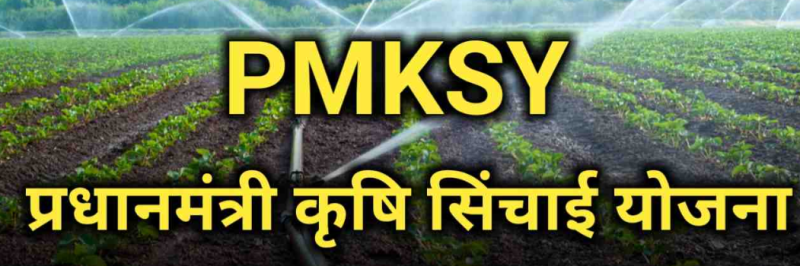
The Government of India is promoting technology-driven irrigation modernisation under the Pradhan Mantri Krishi Sinchayee Yojana (PMKSY), including the use of SCADA and Internet of Things (IoT) systems to improve water management and irrigation efficiency across agricultural regions.
According to information released by the Press Information Bureau, irrigation remains a state subject, with state governments responsible for planning, implementation and management of irrigation projects. The role of the central government is limited to providing technical guidance and partial financial assistance for projects approved under ongoing schemes.
Launched in 2015–16, PMKSY aims to increase the availability of water at the farm level, expand the area under assured irrigation, improve on-farm water-use efficiency and promote sustainable water conservation practices. The Union Cabinet approved the continuation of the scheme for the period 2021–22 to 2025–26 in December 2021.
Under the PMKSY–Accelerated Irrigation Benefit Programme (AIBP), technological innovations such as underground pipelines, micro-irrigation systems and SCADA-based monitoring are being encouraged to enhance irrigation efficiency. States are being urged to adopt these technologies to improve water distribution and utilisation.
In addition, the Cabinet approved pilot projects for the modernisation of Command Area Development and Water Management (M-CADWM) on April 9, 2025, as a sub-scheme of PMKSY. The programme aims to introduce integrated water resource management through pressurised pipe networks, micro-irrigation and advanced monitoring systems such as Supervisory Control and Data Acquisition (SCADA) and IoT for water accounting and management.
The M-CADWM scheme will cover 32 clusters across 23 states and Union Territories. The total approved outlay for the scheme is ₹1,600 crore, including a central share of ₹1,100 crore—of which ₹100 crore is allocated for administrative and related expenses—and a state share of ₹500 crore. The budget estimate for 2026–27 includes an allocation of ₹550 crore for the programme.