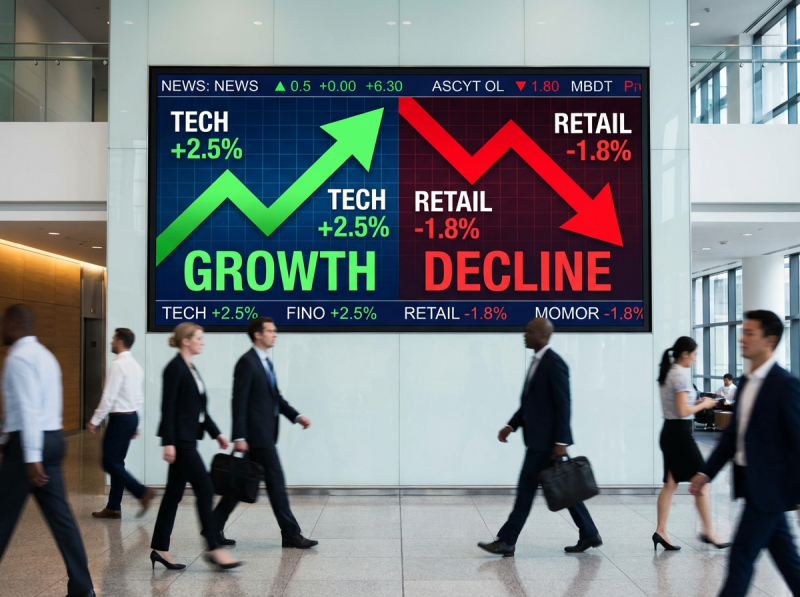
Global equity markets came under sharp pressure on Tuesday after a sudden collapse in Bitcoin, weak US economic data, and a jump in Japan’s bond yields triggered a widespread risk-off sentiment. The volatility erased recent gains in major US indices and dented confidence across asset classes.
Wall Street Suffers Sharp Pullback
The new month opened on a sour note for US markets:
The Dow Jones tumbled more than 400 points, closing at its intraday low.
The Nasdaq and S&P 500 both snapped their five-day winning streak, weighed down by profit-booking in tech stocks.
Tech sentiment weakened further after the unexpected resignation of Apple’s AI chief, John Giannandrea, increasing pressure on the sector. NVIDIA and Apple attempted to stabilize the indices, but continued losses in Microsoft dragged the broader market lower.
Despite the declines, Walmart managed to end at a 52-week high, though it provided limited support to the Dow.
Bitcoin’s Steep Drop Sends Shockwaves
A sharp sell-off in the crypto market amplified global anxiety:
Bitcoin plunged to $85,000, marking its worst single-day fall since March.
Over $1 billion in leveraged crypto positions were liquidated in 24 hours, intensifying panic.
Bitcoin had already dropped below $90,000 in November, breaking a multi-month support level.
The abrupt collapse spilled over into equities, with risk-sensitive sectors facing pronounced pressure.
US Macro Data Weakens Market Confidence
Fresh economic data from the US added fuel to the risk-off sentiment:
Factory activity (PMI) for November declined to 48.2 from 48.7, marking the ninth consecutive month in contraction territory.
According to ISM, higher input costs, ongoing policy uncertainty, and a sharp decline in new orders contributed to the slowdown.
New orders recorded their steepest drop since July, signaling rising economic strain.
UBS Maintains Positive View Despite Volatility
Amid the turmoil, UBS continues to project a constructive outlook for US equities:
The firm believes stocks can sustain an upward trend as long as the US avoids recession and the Federal Reserve continues reducing interest rates.
UBS expects a 25 bps rate cut on December 10.
The bank forecasts earnings growth of 7–14% in 2026, which it believes could support further market upside.
Leadership Shake-Up at Apple
Apple faced a major leadership development that added to sector-wide jitters:
John Giannandrea, Apple’s senior-most AI executive, resigned from his role.
Amar Subramanya, with prior stints at Microsoft and Google DeepMind, has been appointed as his successor.
Experts suggest this leadership transition could influence Apple’s long-term AI strategy at a critical moment for the company.