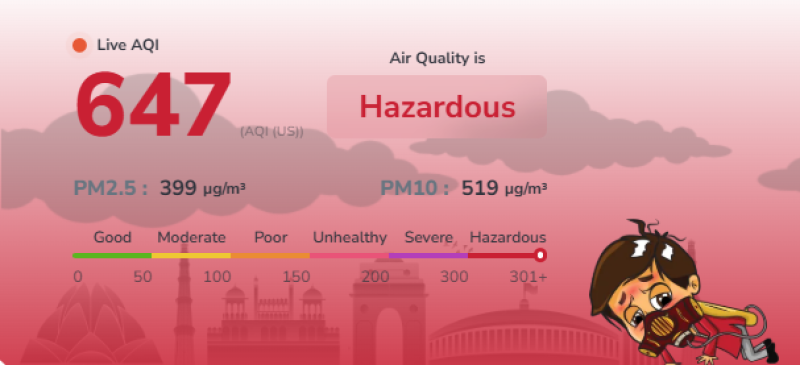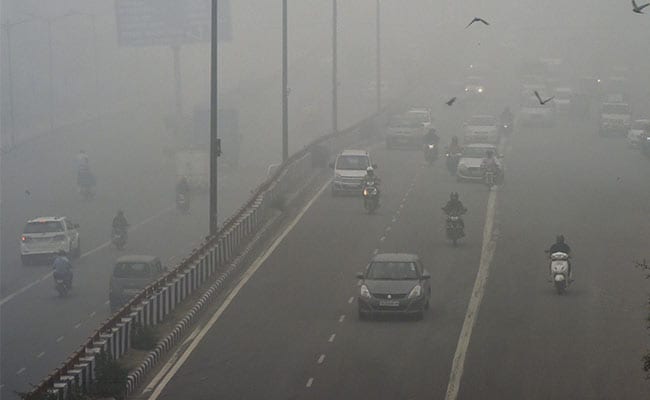
Delhi’s air pollution emergency deepened further on Monday as several localities across North Delhi reported hazardous air quality, with AQI levels breaching the 500–650 range, indicating extremely dangerous conditions for public health.
According to real-time air quality monitoring data, Dhirpur Village and Shivaji Nagar emerged as the worst-affected areas, both recording an AQI of 647, firmly in the ‘Hazardous’ category. PM2.5 levels in these areas stood at 399 µg/m³, while PM10 concentrations touched 519 µg/m³ in Dhirpur and 507 µg/m³ in Shivaji Nagar—many times higher than permissible limits.
Other pollution hotspots included:
West Sant Nagar, Burari: AQI 621, PM2.5 at 386 µg/m³
Chandu Nagar: AQI 561, PM2.5 at 356 µg/m³
Khera Khurd Village: AQI 559, PM2.5 at 355 µg/m³
Old Gupta Colony: AQI 549, PM2.5 at 350 µg/m³
Ekta Vihar: AQI 519, PM2.5 at 335 µg/m³
Kalindi Colony: AQI 503, PM2.5 at 327 µg/m³
Across these locations, PM10 levels consistently ranged between 433 µg/m³ and 509 µg/m³, reflecting severe particulate pollution trapped near the surface due to low wind movement, high humidity, and overcast winter conditions. Temperatures hovered between 17°C and 20°C, offering no atmospheric relief.
Health Emergency Conditions
Air quality experts warn that AQI levels above 500 can cause serious respiratory distress, reduced lung function, cardiovascular strain, and increased hospital admissions, even among healthy individuals. Children, the elderly, and those with asthma or heart disease face the highest risk.