New Delhi, March 13:
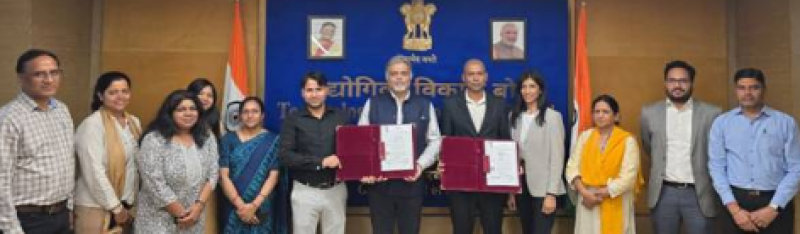
The Technology Development Board under the Department of Science and Technology has extended support to an India–Singapore collaborative project aimed at developing an AI-integrated plasma system for clean hydrogen production and advanced carbon materials.
The project has been awarded to APChemi Private Limited under the India–Singapore joint call for proposals. The initiative focuses on building a next-generation microwave plasma reactor capable of converting methane into hydrogen and valuable carbon nanomaterials without producing carbon dioxide emissions.
Under the collaboration, India-based APChemi will lead the development of industrial-scale gas separation, quenching, and carbon collection systems, while Singapore partner ComSense Technologies will contribute advanced real-time plasma diagnostics and AI-driven control systems to improve reactor efficiency.
Clean hydrogen with high-value carbon output
The pilot-scale facility is designed to produce around 4 kg of hydrogen per hour, along with approximately 12 kg of high-value carbon materials, including functional carbon nanostructures and diamond-graphene hybrid materials.
This integrated approach enables a dual-revenue model:
Hydrogen serves as a clean energy source.
High-value carbon nanomaterials can be sold commercially, helping reduce the cost of hydrogen production.
Plasma pyrolysis technology
The system uses microwave plasma pyrolysis, a process that breaks methane and hydrocarbons into hydrogen and solid carbon using high-temperature plasma discharge. Unlike conventional hydrogen production methods, the process generates no CO₂ emissions, making it a cleaner alternative.
Compared to traditional water electrolysis, plasma pyrolysis can achieve higher energy efficiency, while simultaneously producing commercially valuable materials such as graphite, graphene, and carbon black.
AI-driven optimization
The reactor integrates artificial intelligence and machine learning to continuously monitor and optimize operational parameters such as microwave power, gas feed rate, plasma temperature, and electron density.
The AI system dynamically adjusts reaction pathways to:
maximize hydrogen yield
improve energy efficiency
precisely control carbon nanomaterial structures for applications ranging from battery-grade graphite to advanced nanostructures.
Strategic collaboration
According to Rajesh Kumar Pathak, Secretary of the Technology Development Board, international collaboration plays a critical role in addressing global energy and sustainability challenges.
He noted that the India–Singapore technology partnership combines strengths in advanced manufacturing, artificial intelligence, and clean energy systems to develop globally competitive solutions.
The project is expected to contribute significantly to clean hydrogen ecosystems and advanced material manufacturing, supporting the global transition toward sustainable energy technologies.