Anup Agarwal, Co-founder, Kiwi
The ₹2,000 crore incentive allocation for UPI and RuPay in Budget 2026 reinforces the importance of a sustainable digital payments ecosystem. As UPI continues to scale across transactions and use cases, the role of NPCI in maintaining interoperability, reliability, and low-cost access remains central. Sustained incentives are critical to preserving this affordability while enabling responsible innovation across the ecosystem. At Kiwi, we see this as a strong foundation for layering transparent and responsible credit on top of trusted payment rails to improve access and affordability for everyday consumption.
Vikas Tarachandani, Co-founder, SURE
"The Budget reinforces confidence in India's financial ecosystem by prioritising stability, reform continuity and sector preparedness for long-term growth. The focus on improving credit quality and expanding financial inclusion strengthens the foundation for more disciplined borrowing and efficient capital allocation."
Sundeep Mohindru, Founder & Promoter, M1xchange
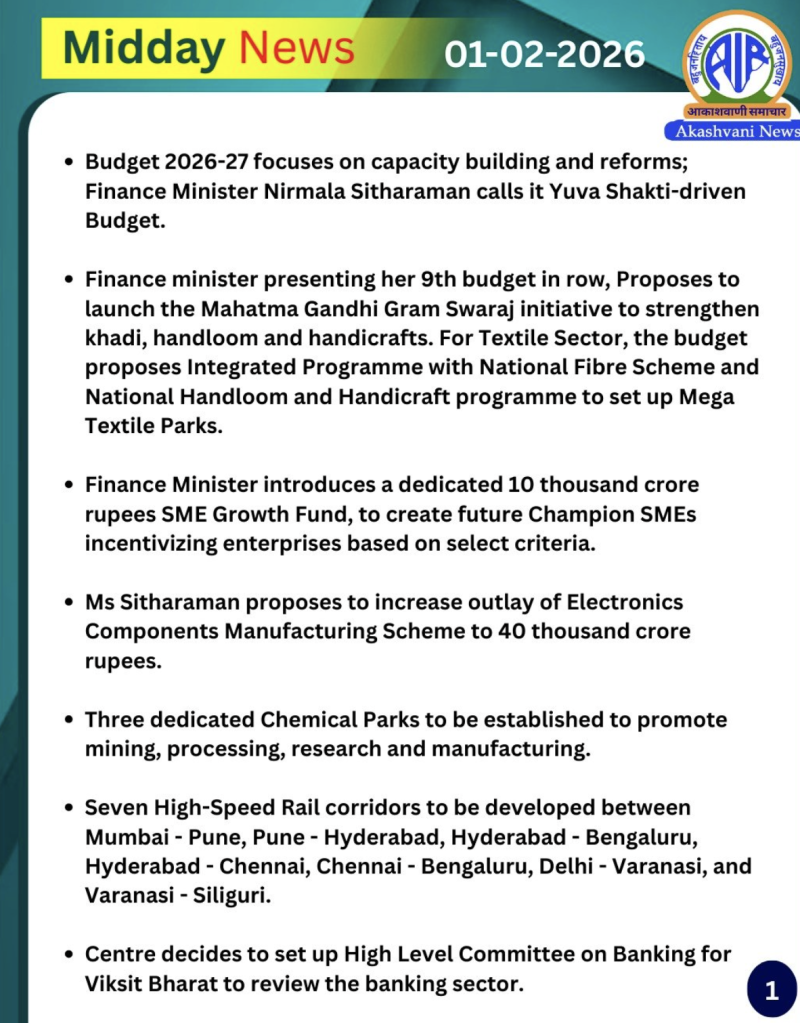
"The Budget's decisive push to create CHAMPION SMEs by giving equity support and by anchoring liquidity access through the TReDS ecosystem marks a structural shift in how working capital flows to MSMEs. By positioning TReDS as the settlement platform for liquidity support for MSMEs for their supplies to CPSEs, the government encourages wider participation in invoice discounting. This re-establishes the value add TReDS is making towards solving the delayed payment challenge for MSMEs. Credit guarantee support on Invoice discounting on TReDS and the integration of GeM with TReDS will enable quicker and more affordable financing for suppliers. Treating TReDS receivables as asset backed securities will deepen liquidity multifold and enhance the secondary market expansion for invoices discounted . Equally critical is the creation of corporate mitras through professional institutions, which will strengthen affordable compliance support in Tier 2 and Tier 3 towns. Together, these measures reinforce MSMEs as India's engine of growth."
Pushkar Mukewar, Founder and CEO, Drip Capital
"The Budget's measures to support seafood exports, including increased duty-free input limits, extended export timelines, and duty-free fish catch in the EEZ and on the High Seas, will significantly ease cost and working-capital pressures for Indian exporters. These steps create new avenues to scale operations, manage cash flows more predictably, and fully harness the economic value of marine resources."
Mr. Vineet Mittal, Chairman, Avaada Group
Budget 2026–27 strikes balance between ambition, growth and discipline. With sustained public capex of ₹12.2 lakh crore, a clear fiscal consolidation path, and reforms like the Infrastructure Risk Guarantee Fund, it focuses on building long-term productive capacity rather than short-term stimulus. The emphasis on infrastructure, MSME scaling, transport, digital and logistics readiness sends a strong signal that India is investing for durable growth, competitiveness, and investor confidence.
Mr. Shekhar Singal, Managing Director, Eastman Auto & Power Limited
"The Union Budget reinforces policy continuity for India's energy transition by strongly backing domestic manufacturing, clean mobility, and decentralized renewable energy adoption with storage. With India expected to account for nearly 30% of global energy demand growth by 2035, the Budget's emphasis on renewable capacity expansion, grid integration, and reliable power delivery is both timely and strategically aligned with the country's long-term clean energy ambitions.
The exemption of basic customs duty on select capital goods, along with the addition of 35 capital goods for EV battery manufacturing, will provide a meaningful boost to domestic battery manufacturing and energy storage capabilities. In parallel, the ₹40,000-crore push for electronics manufacturing across key components such as printed circuit boards, capacitors, resistors and display modules will strengthen India's electronics and advanced manufacturing ecosystem.
The continued focus on grid-scale renewable energy projects, alongside rooftop solar adoption under initiatives such as PM SURYA GHAR, will accelerate decentralised energy access while enhancing grid resilience. Overall, the Budget provides much-needed clarity and continuity, supporting India's 500 GW non-fossil fuel target and enabling companies like ours to scale integrated solar-storage solutions, strengthen last-mile e-mobility infrastructure, and drive sustainable energy access across both urban and rural markets."
Mr. Bhupinder Singh, Founder, InCred Group
This Budget has many positive structural elements and reflects a long term growth mindset. The strong push on infrastructure, domestic manufacturing and the technology ecosystem can meaningfully strengthen India's industrial and innovation base. At the same time, the sharp increase in STT on futures and options has understandably unsettled markets and could weigh on trading volumes at a delicate moment. Predictability and active participation are vital for deep capital markets, so ongoing engagement between government and market stakeholders will be key
Paul Salnikoff, Managing Director and CEO, Executive Centre India Limited.
The Union Budget underscores the government's continued focus on strengthening urban infrastructure and improving capital access for long-term commercial development. Over the past decade, instruments such as REITs and InvITs have enhanced transparency and institutional participation in India's real estate ecosystem. The proposed infrastructure risk guarantee fund and calibrated partial credit guarantees further reinforce lender confidence by addressing construction-phase risks. For enterprise-focused workspace providers operating in India's leading business districts, these measures support the creation of high-quality, professionally managed office environments aligned with evolving occupier expectations. The parallel emphasis on strengthening hospitality and service-led institutions also contributes to building a skilled, customer-centric workforce, supporting sustainable growth across office and workspace platforms
Mahesh Iyer – Managing Director & Chief Executive Officer, Thomas Cook (India) Limited
"The Union Budget 2026 reflects a strong recognition of tourism as a strategic pillar for economic growth, employment generation, and regional development. From a consumer standpoint, the rationalisation of Tax Collected at Source is a welcome move, the simplified flat 2% TCS on overseas tour programme packages replaces the earlier two-tier structure, easing compliance and unblocking cash flows for travellers. We also appreciate the reduction of TCS to 2% on education and medical remittances, which will significantly ease the burden on these important long-term drivers, especially amid the impact of rupee depreciation.
The pilot initiative to upskill 10,000 tourist guides across 20 iconic sites through a standardised 12-week hybrid programme is a strong step towards ensuring quality service delivery and enhancing India's global competitiveness. Additionally, the development of seven high-speed rail corridors, expansion of 20–25 new National Waterways, and incentives for indigenising seaplane manufacturing will greatly enhance connectivity and unlock new tourism circuits, including remote and island destinations. The proposed scheme to develop five regional medical tourism hubs in partnership with the private sector further strengthens India's positioning as a global healthcare destination.
Overall, the Budget reinforces tourism's role in driving inclusive growth; however, a higher marketing outlay towards promoting Incredible India could have delivered a powerful double-barrel impact by complementing infrastructure development with stronger global visibility."
Mr. Vishal Suri – Managing Director & CEO, SOTC Travel Limited
"Budget 2026 sets the stage for accelerated growth in India's travel and tourism sector. The reduction of TCS on outbound travel to 2% will make international holidays more accessible and boost demand. While the establishment of five regional medical tourism hubs positions India as a leading destination for integrated hospitality and healthcare. High-speed rail corridors, city economic regions and the expansion of nature-based and experiential tourism—from eco-trails and mountain circuits to wildlife and heritage experiences—will enhance connectivity and diversify offerings. Initiatives such as training 10,000 tourist guides, establishing the National Institute of Hospitality, and developing a Digital Knowledge Grid will professionalize the workforce and strengthen planning. Together, these measures enhance the competitiveness of Indian tour operators, attract investment, and create new opportunities across the tourism value chain. We welcome these progressive steps, while continuing to advocate for formal Industry status for tourism to unlock the sector's full potential."
Mr. Manish Agarwal, Managing Director, Satya Group, President, CREDAI Haryana: "In the lead-up to Union Budget 2026, the real estate sector was looking for a combination of demand-side support, tax incentives, and reforms to ease project delivery and financing. While a few of these did not receive immediate focus, the Budget's clear commitment to reform, anchored in an infrastructure-led growth strategy, emphasis on Tier-1 and Tier-2 markets, and a reforms-over-rhetoric approach, offers a strong foundation for sustainable sector growth.
"At the same time, the industry continues to look forward to sharper policy support for affordable housing, particularly through rationalised transaction costs, improved access to finance, and measures that enhance viability for developers while preserving affordability for end users. Strengthening affordable housing remains critical for maintaining broad-based demand and urban inclusivity."
The proposal to monetise and recycle CPSE-owned real estate reflects a pragmatic reform mindset by addressing the long-standing scarcity of well-located urban land. When aligned with investments in future-ready infrastructure and connectivity, these measures can ease supply constraints, encourage planned densification, and attract institutional capital. Over time, this can enable more balanced, efficient, and economically productive urban development across India, while positioning emerging cities as sustainable engines of real estate demand."
Ankit Agarwal, Managing Director, Alankit Limited: "This year's Budget sends a reassuring message for the banking and financial services sector. The proposed high-level committee on banking shows the government's intent to pause, reflect, and prepare the sector for India's next phase of growth, without losing sight of stability, inclusion, and customer trust.
The clear roadmap for NBFCs, along with the proposed restructuring of PFC and REC, is a practical step towards building scale, improving efficiency and strengthening credit flow to priority sectors. At the same time, opening up direct equity investment for foreign individuals and raising investment limits reflects growing confidence in India's markets and will help bring in patient, long-term capital.
Measures such as an increase in Securities Transaction Tax to curb excessive speculation in the F&O segment underline the government's focus on protecting investors and encouraging more responsible market participation. Seen from a long-term perspective rather than short-term reactions, the Budget feels balanced and forward-looking, focused on strengthening the financial ecosystem while keeping it resilient, inclusive, and ready for a Viksit Bharat. The move to tax buybacks as capital gains across all shareholder categories is also a clear attempt to curb tax arbitrage and bring greater fairness to the system, supporting more transparent and disciplined capital allocation."
Paritosh Ladhani, Joint Managing Director of SLMG Beverages: "The Union Budget 2026 strongly reinforces a manufacturing-first, 'Make in India' approach, which is encouraging for companies that are deeply invested in domestic production and local supply chains. The continued push on infrastructure, with capital expenditure raised to ₹12.2 lakh crore, will directly benefit beverage manufacturers by improving logistics efficiency, distribution reach, and last-mile connectivity across markets. The focus on localisation across bottling, packaging, and allied inputs supports greater cost stability and resilience, while sustained support for MSMEs remains critical given their integral role in our vendor and transport ecosystem. Although there were no direct tax incentives for non-alcoholic beverages, the broader pro-manufacturing and pro-consumption policy environment, along with ongoing discussions on GST rationalisation, provides a positive foundation for volume-led growth and long-term expansion of India's packaged beverage sector."
Satyam Shivam Sundaram, Partner, Government and Public Sector, EY India, "Strengthening allied healthcare professionals can be a game-changer for India's healthcare system. India currently has above 8.4 allied health professionals per 10,000 people, well below the desired level of 14-16 (as per WHO standards). By expanding training capacity, standardising certification, and improving deployment of allied professionals such as lab technicians, physiotherapists, radiographers and paramedics, the reform directly improves access, especially in rural and underserved areas where doctors are scarce. It enhances quality of care through better diagnostics, rehabilitation, preventive services and continuity of treatment. Most importantly, it improves affordability by enabling cost-effective task-sharing, reducing unnecessary dependence on specialists and tertiary hospitals. Overall, a stronger allied health workforce supports scalable, efficient and people-centric healthcare delivery aligned with India's universal health coverage goals."
Amit Vatsyayan, Partner and Leader,Social & Skills Sector, EY India, "The Budget reflects a strategic shift from allocation-driven spending to acceleration-oriented reforms, aimed at closing structural gaps while strengthening India's export competitiveness in a challenging global environment. The emphasis on high-value crops such as coconut, cashew and walnuts signals a forward-looking diversification strategy with strong income potential, contingent on improvements in quality, post-harvest management and value chain integration. The Mahavistar initiative stands out as a systemic intervention to bridge last-mile knowledge gaps by transferring validated research to farmers, leveraging Digital Public Infrastructure like AgriStack and AI-enabled advisories to enhance productivity, quality and competitiveness. Renewed focus on fisheries and animal husbandry addresses employment, productivity and institutional bottlenecks, while the stress on integrated value chains recognises the centrality of markets, processing and logistics to sustainable farm incomes. Finally, initiatives such as Lakhpati Didi and SheMart reinforce women-led, market-linked rural livelihoods and create synergies with tourism, temple-town rejuvenation and allied rural services, strengthening the overall rural economic ecosystem."
Rahul Kakkad, Tax Partner, Consumer Products and Retail Sector, EY India "The Union Budget 2026–27 offers a structural boost to the Consumer, Products & Retail (CPR) sector by prioritising textiles, MSMEs, tourism, sports and farmers. Textiles gain from schemes promoting self-reliance, modernisation, skilling and sustainability, while MSME measures improve access to capital and receivables. Infrastructure spending supports sports, and farm initiatives focus on diversification and high-value crops. Customs rationalisation and direct tax compliance simplification are positives. However, measures to boost disposable income and attract foreign investment remain notably absent."
Vinay Rustagi, CBO, Premier Energies, "This is a forward looking budget with an eye on improving long-term energy security and domestic manufacturing industry competitiveness across different parts of the energy sector. Specifically for solar, the big increase in funds allocation for PM-Surya Ghar and KUSUM schemes to Rs. 27,000 crores would be a major help for domestic manufacturers. The government has listened to the industry and announced a provision to develop hi-tech tooling capability for precision equipment and capital goods, which will help to reduce reliance on other countries. Import duty waivers on equipment used for battery storage manufacturing and critical mineral processing are expected to reduce cost of domestically manufactured products. Other significant measures include substantial financial support for developing new technologies like carbon capture and nuclear."
Mr Rajamani Krishnamurti, President, ISSDA: "The Union Budget 2026–27 is a definitive statement of intent, reinforcing the government's long-term commitment to sustainable infrastructure and the longevity of national assets. By intensifying investments in railways, water management, urban infrastructure, and public utilities, the government has created a natural and compelling case for the wider adoption of stainless steel. This material stands unmatched in life-cycle cost efficiency, corrosion resistance, and recyclability.
However, the most heartening and logical stroke of this Budget is the visionary allocation of Rs. 10,000 crores for the MSME sector. This is not just a fiscal injection; it is a lifeline for the very backbone of our industry. Since a significant portion of India's stainless steel capacity resides within the MSME segment, this support is a profound recognition of their role in the national value chain. It empowers these smaller units to upgrade technology, enhance quality, and compete more effectively against the tide of substandard imports.
This policy direction, focused on quality-centric procurement and standards enforcement, coupled with robust support for MSMEs, will be instrumental in enhancing material choices across public projects. ISSDA strongly believes that this Budget provides a historic opportunity to institutionalise stainless steel as the preferred material for critical national infrastructure. It is a move that simultaneously supports our sustainability goals, ensures economic efficiency, and fortifies the domestic manufacturing ecosystem for the long term."
Mr Sudipta Mukherjee, Managing Director, Texmaco Rail & Engineering: "The Union Budget 2026–27 reinforces railways as a central pillar of India's infrastructure and logistics strategy. The announcement of seven high-speed rail corridors as 'growth connectors', along with a new Dedicated Freight Corridor between Dankuni and Surat, will significantly enhance passenger mobility, freight efficiency and regional economic integration.
A capital outlay of around ₹2.65 lakh crore for railways, combined with large-scale investments in safety systems such as Kavach, capacity expansion through track doubling and new lines, and the rollout of Vande Bharat, Amrit Bharat and Namo Bharat trains, provides strong visibility for sustained demand across rolling stock, wagons and rail engineering solutions.
This Budget clearly aligns rail development with the PM GatiShakti framework, focusing on multimodal connectivity, reduced logistics costs and Make-in-India manufacturing. It strengthens India's ambition to emerge as a global hub for modern rail engineering, manufacturing and exports."
Mr Kirthi Chilukuri, Founder & Managing Director, Stonecraft Group:, "Budget 2026–27 lays strong emphasis on urban development, infrastructure creation and sustainable growth, which aligns well with the evolving priorities of the real estate and built-environment sector. The continued focus on smart cities, urban infrastructure, housing and climate-resilient development encourages the adoption of innovative, sustainable and human-centric design approaches. The Budget's direction towards green infrastructure, energy efficiency and long-term asset value creation provides an enabling framework for developers focused on biophilic design, integrated communities and future-ready living spaces. It reinforces the importance of building responsibly—where sustainability, well-being and economic value go hand in hand."
Mr Rohit Chandra, Co-Founder & CEO, OMC Power: "The Union Budget 2026–27 reaffirms the government's commitment to clean energy, power reliability and last-mile infrastructure. Continued focus on renewable energy, energy transition and infrastructure financing creates a favourable environment for decentralised and hybrid power solutions, particularly in underserved and high-growth regions.
The emphasis on sustainable growth, MSME support and infrastructure-led development opens up significant opportunities for reliable power deployment across telecom, rural enterprises and emerging industrial clusters. This Budget strengthens the foundation for scalable, resilient and low-carbon power systems that are essential for inclusive economic growth."
Pratik Vaidya, Chief Vision Officer and Managing Director, Karma Management Global Consultancy Pvt. Ltd
Budget 2026-27 has clearly chosen stability on personal taxation. After last year's major reset under the new tax regime, where tax liability was effectively reduced to zero up to ₹12 lakh of taxable income through the enhanced rebate under Section 87A, and for many salaried taxpayers up to about ₹12.75 lakh after standard deduction, this year there is no further change in slabs or rates. The message is continuity, while simplification and compliance ease become the real story.
For MSMEs, the introduction of Corporate Mitras is a very practical move. It recognises that formalisation and governance are no longer optional, but most small businesses do not have affordable, on-ground access to professional compliance support. A structured cadre backed by professional institutions can reduce accidental non-compliance and help MSMEs operate with more confidence.
The combination of equity support through the ₹10,000 crore SME Growth Fund with liquidity support through stronger TReDS adoption addresses the two most persistent MSME pain points: access to growth capital and cash flow. If payment discipline and invoice discounting are enforced in spirit, it can reduce the working capital stress that blocks MSME scale-up.
On the talent side, the emphasis on linking education with employment signals a shift from qualification-led to skill-led growth. The focus on modular learning, continuous upskilling and job-ready capabilities is directionally right, especially for MSMEs and services where the talent gap is often about readiness, not availability.
Overall, the budget strengthens the ecosystem around formalisation, compliance and employability. If implemented well, these measures can improve trust, payment discipline, productivity and long-term resilience across the MSME and services landscape.
"The announcements around ISM 2.0, electronics manufacturing, critical minerals, and rare earth corridors signal a fundamental shift in India's clean energy trajectory. For the solar sector, this goes far beyond capacity expansion toward building deep technological sovereignty. India is moving from being a hardware assembler to owning critical layers of the energy-tech IP stack—control systems, forecasting platforms, and grid software that power modern solar and storage ecosystems.
The rare earth corridors address a hidden but critical solar bottleneck by securing access to materials essential for high-efficiency motors, power electronics, and advanced energy systems, significantly reducing strategic dependence on China. Complementing this, customs duty exemptions for critical mineral processing, lithium-ion cell manufacturing for storage, and inputs like sodium antimonate for solar glass strengthen domestic value chains across materials, components, and technology—forming the backbone of India's long-term energy transition and energy security infrastructure," said Mr Amod Anand, Co-Founder & Director, Loom Solar.
Inputs attributed to Amit Srivastava, Founder and Chief Catalyst of Nutrify Today
Quote: The Union Budget signals a clear intent to position India as a serious global health and wellness manufacturing hub. While nutraceuticals didn't receive headline tax relief, the deeper enablers—biopharma-led R&D, AYUSH institutional strengthening, trade facilitation, and manufacturing incentives—create a structurally positive runway. For both Indian brands and international players, the message is clear: India is open for innovation, collaboration, and long-term value creation in supplements and nutraceutical ingredients.
Mr Girish Tanti, Co-founder & Vice Chairman - Suzlon Group and Chairman of Indian Wind Turbine Manufacturers Association (IWTMA), on the same.
"Budget 2026 is a testament to our nation's resilience and commitment to growth, even amidst global uncertainty. With a significant increase in capital expenditure to ₹12 lakh crore and energy spending to ₹1 lakh crore, we're laying the foundation for a sustainable future. Focus on renewable energy growth, grid modernization, and energy security will accelerate India's energy transition. Atmanirbhar Bharat push with rationalizing policies, and incentivizing innovation through PLI and tax benefits for domestics R&D and manufacturing. Bond market reforms will further boost our economic momentum. This inclusive and comprehensive budget ensures we're on course for continued growth and prosperity"
Mr. Devarsh Vakil, Head of Prime Research, HDFC Securities-
At a time when India is navigating considerable global uncertainty, the Union Budget's emphasis on structural reforms and maintenance of a stable policy regime is particularly welcome. Given the constraints of limited tax inflows, the Centre has done what it reasonably could to provide for capital expenditure. However, the real test ahead lies in whether private sector capex can accelerate sufficiently to complement government spending, achieving the budgeted nominal GDP growth of 10% will require close monitoring and concerted effort from all stakeholders.
The liberalization of investment norms for NRIs represents a welcome measure to attract much-needed capital to Indian markets, signaling the government's commitment to broadening the investor base. While the enhanced STT regime for derivatives may create near-term headwinds for capital market participants, it reflects a long-term vision for market stability and maturity, a necessary recalibration for sustainable growth.
The establishment of a High Level Committee on Banking for Viksit Bharat, tasked with comprehensively reviewing the sector and aligning it with India's next phase of growth while safeguarding financial stability, inclusion, and consumer protection, is a commendable step forward.
The government's sustained focus on deregulation deserves particular mention. Over 350 reforms have been rolled out, encompassing GST simplification, notification of Labour Codes, and rationalization of mandatory Quality Control Orders. The formation of High Level Committees and the Central Government's collaboration with State Governments on reducing compliance requirements demonstrates a systematic approach to ease of doing business.
The Budget's recognition of the tourism sector's potential to drive employment generation, forex earnings, and expand local economies is very welcome and reflects an appreciation of India's diverse strengths.
Finally, the proposal to provide tax holidays until 2047 for foreign companies providing cloud services globally using data centre infrastructure in India demonstrates long-term strategic thinking. By recognizing the need to enable critical infrastructure and boost investment in data centres, this measure positions India favorably in the global digital economy for decades to come.
Nirmal Kumar Meharia, Director of Finance & Operations, Supertron Electronics
"The Union Budget 2026 is a forward-looking blueprint that reinforces India's transition from a technology consumer to a global manufacturing hub. The launch of ISM 2.0 and the expanded ₹40,000 crore outlay for the Electronics Components Manufacturing Scheme are transformative steps. For the IT distribution sector, these reforms mean more resilient supply chains and a significant reduction in import dependencies as we move toward full-stack Indian IP.
Furthermore, the tax holiday for Data Center and Cloud service providers until 2047 is a visionary move that will trigger massive capacity building. This ensures a steady, long-term demand for high-end enterprise solutions and digital infrastructure. While the increase in STT is a point of note, the overall emphasis on MSMEs and the 'Make in India' initiative provides the stability and momentum needed for the IT industry to scale new heights."
Mr Pankaj Tripathi, Founder and CEO of Vernost:
"The Budget's strong push towards emerging technologies such as AI and quantum computing signals a decisive shift towards building a future-ready, innovation-led economy. By backing missions that integrate research, development, and real-world application, the Government is creating an ecosystem where technology drives inclusive growth from youth upskilling to wider access and opportunity. For Vernost, this reinforces the importance of enabling institutions and enterprises with agile, tech-driven solutions that accelerate adoption and translate innovation into measurable outcomes across sectors."
Hemant Sood, Managing Director, Findoc
The Union Budget 2026 strikes a thoughtful balance between growth-oriented capital expenditure and strategic market reforms. While the push to deepen corporate bond markets and restructure key financial institutions underscores long-term market development, the industry had hoped for more direct capital gains relief to further boost equity participation. Investors will cautiously assess the impact of changes in tax and transaction frameworks, especially as markets digest new norms. For mutual fund and equity traders, this Budget signals both opportunity and volatility, emphasising the importance of diversified strategies and disciplined investing in quality assets. Overall, we see the Budget as a step toward a more resilient financial ecosystem, with room for refinement in investor-friendly taxation to unlock long-run wealth creation.
Dr. Bushra, Associate Professor- Finance, JIMS Rohini
"The Union Budget's strong push to strengthen the education, employment, and enterprise continuum is a progressive step that reinforces the need for industry-aligned learning. The proposed University Townships near industrial and logistics corridors can significantly enhance experiential education by integrating academia with real-world business ecosystems. Initiatives such as establishing AVGC labs and creative hubs, creating a new National Institute of Design, and expanding skill development aligned with emerging technologies reflect a clear commitment to preparing learners for future careers. The announcement of girls' hostels in every district also marks an important step towards improving equitable access to higher education. The government's plan to bring universities, research institutions, skilling centres, and industry partners into a unified ecosystem further strengthens this vision.
For institutions like JIMS Rohini, this presents an opportunity to deepen partnerships with industry, embed emerging technologies such as AI and analytics into curricula, and foster entrepreneurial thinking among students. The emphasis on research, innovation, and inclusive access ensures that education remains both aspirational and equitable. Such forward-looking measures will play a pivotal role in building a future-ready workforce and accelerating India's journey towards Viksit Bharat 2047."
Atishay Jain; Managing Partner; Koncept Global Books
The Budget's clear emphasis on research-led education and future technologies like AI signals a shift from rote learning to innovation-driven skill development. Structured investments in advanced learning ecosystems encourage institutions to prepare students for emerging industries rather than legacy roles. For Koncept Global Books, this reinforces the need for high-quality, application-oriented academic content that bridges theory with real-world practice. Strengthening this research and learning foundation will be critical to nurturing future-ready talent and supporting India's ambition of becoming a global knowledge powerhouse."
Mr Prashant Kumar, Co-founder and CEO of zingbus:
“The Union Budget's renewed focus on tourism and hospitality presents a significant opportunity for the intercity mobility sector. Investments in a National Institute of Hospitality, upskilling local guides, and the development of sustainable trekking and heritage circuits will drive higher tourist footfall across emerging and iconic destinations. For zingbus, this translates into enabling safer, reliable, and technology-led travel that seamlessly connects travellers to these locations. As tourism expands beyond metros, efficient bus networks will play a critical role in improving accessibility, supporting local economies, and powering India's next phase of travel-led growth.”
Dileep Mangsuli, Chairman- Cancer Treatment Services International (CTSI):
The Union Budget 2026's exemption of basic customs duty on essential cancer drugs is a timely and compassionate step towards reducing the financial burden of cancer treatment. Making imported therapies more affordable can significantly improve access to timely, quality care for patients facing complex oncological conditions. At American Oncology Institute we welcome this patient-centric reform and remain committed to elevating cancer care standards globally while ensuring accessibility closer to home. With a presence across 17 cities in India, we strive to deliver advanced, affordable, and comprehensive oncology services that help ease out-of-pocket costs and improve outcomes for families nationwide."