

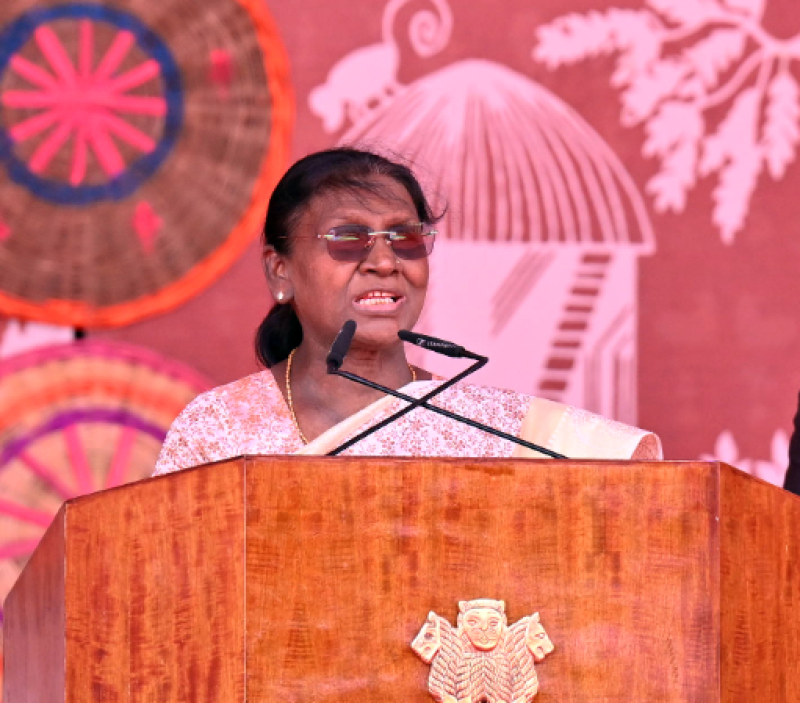
Jagdalpur, Chhattisgarh, February 7, 2026: The President of India, Smt. Droupadi Murmu, inaugurated Bastar Pandum 2026 today in Jagdalpur, celebrating the region’s rich cultural heritage and community life.
Addressing the gathering, the President said that in Bastar, when farmers sow seeds in fertile land and the mango season arrives, it is also the season of Pandum—reflecting how people here celebrate every aspect of life. She noted that others can learn from the people of Bastar about this spirit of living.
The President highlighted that while Bastar’s traditions and culture have always attracted people, the region suffered for nearly four decades due to Maoist violence, causing severe hardships, especially for youth, tribal and Dalit communities. She said that decisive actions taken by the Government of India against Maoist extremism have significantly reduced fear, insecurity and distrust, with many former extremists now renouncing violence and returning to mainstream society.
She added that many individuals in Chhattisgarh who were once involved in Maoist activities have surrendered, and the government is ensuring their rehabilitation through development and welfare initiatives. The state government’s ‘Niyad Nellanar Yojana’ is playing a key role in empowering rural communities. The President expressed happiness at witnessing the beginning of a new phase of development in Bastar, with improved access to electricity, roads and water, reopening of schools, and children returning to classrooms.
Praising those who have given up violence and rejoined society, the President urged them to have full faith in the Constitution and India’s democratic system, and to move forward with dedication and hard work. She emphasized that the welfare of poor, marginalized and backward communities remains a top priority, with schemes like PM Janman Yojana and Dharti Aaba Janjatiya Gram Utkarsh Abhiyan bringing development benefits to the most remote tribal villages.
The President underlined that education is the foundation of both individual and community development. She noted that Eklavya Model Residential Schools have been established in tribal areas to provide quality education and urged parents and guardians to ensure their children receive proper schooling for a brighter future.

