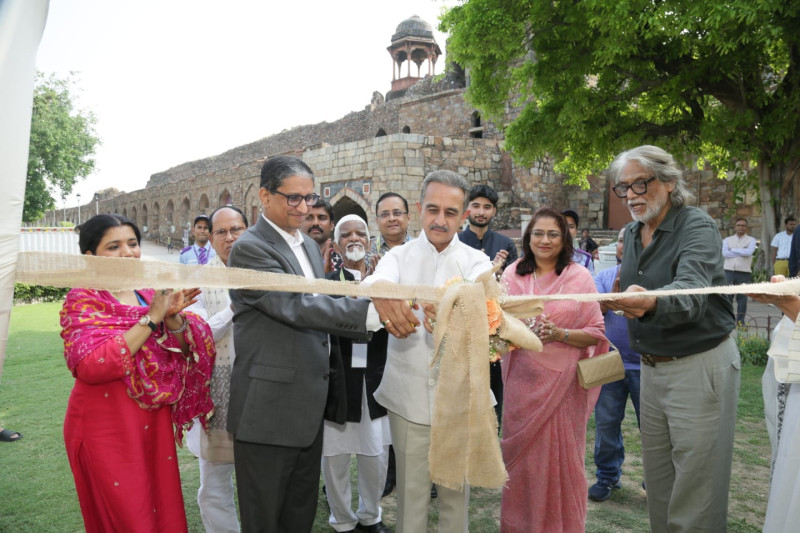
New Delhi, March 29, 2026: Sabhyata Foundation, a Smarak Sarathi for Purana Qila under the Government of India’s Adopt a Heritage 2.0 initiative proudly associates with the return of India’s internationally celebrated World Sufi Music Festival, “Jahan-e-Khusrau 2026”, set against the majestic backdrop of Purana Qila, New Delhi, from March 27 to 29, 2026. This year’s theme, “The Steed of Longing – Safar-e-Ishq Continues,” reflects the enduring journey of love, devotion, and spiritual seeking at the heart of Sufi traditions. The event recorded an impressive turnout of approximately 17,000–18,000 people, reflecting its widespread appeal
This collaboration reflects a larger national vision to transform India’s historic monuments into living cultural spaces that remain publicly accessible, historically respected, and meaningfully activated through art, scholarship, and shared civic experience. As a Smarak Sarathi, Sabhyata Foundation’s stewardship represents a contemporary and deeply relevant model of monument activation aligned with the Government of India’s commitment to conservation, public participation, and cultural revitalisation.
Over the years, Jahan-e-Khusrau has grown into an internationally respected cultural platform dedicated to the timeless legacy of Amir Khusrau, while also reviving the mystical traditions of Rumi, Baba Bulleh Shah, Lalleshwari, and other Sufi saints. More than a festival, it has become a meeting ground of devotion and dialogue where music, poetry, craft, and cultural thought converge.
Its return to Purana Qila carries resonance. More than a venue, the monument becomes a living participant in the experience continuing a long-standing tradition of reanimating heritage architecture through contemporary cultural life. This vision is deeply aligned with Sabhyata Foundation’s wider work across nationally significant monuments including Purana Qila and Safdarjung Tomb, where history, performance, scholarship, and public participation converge.
The 2026 edition will feature an extraordinary musical lineup with celebrated voices of the subcontinent including Satinder Sartaj, Sukhwinder Singh, Hansraj Hans and Lakhwinder Wadali as headline performers. Alongside them, the festival will present distinguished artists such as Jassu Khan Manganiyar, Shivani Verma, Sahil Agha and Sanjukta Sinha, with further artist announcements expected to be confirmed later this week.
“The event recorded an impressive turnout of approximately 17,000–18,000 people, reflecting its widespread appeal
Ms. Avantika Dalmia, Co‑Chairman, Advisory Board, Sabhyata Foundation, said, “At Sabhyata Foundation, we believe cultural experiences are most meaningful when they are accessible, rooted, and shared. Jahan-e-Khusrau 2026 furthers this commitment by bringing together artists, audiences, and traditions at Purana Qila—honouring the past while creating space for contemporary expression. In doing so, it also reinforces our larger endeavour to ensure that India’s historic monuments remain living public spaces where heritage, dialogue, and artistic excellence continue to thrive.”
Reflecting on the continuing journey of the festival, Muzaffar Ali shares, “Jahan-e-Khusrau was born from the whispers of saints and the melodies of mystics. For over two decades it has been a sanctuary where music, poetry, and devotion dissolve boundaries and remind us that love is the ultimate path to unity.”
Meera Ali, co-curator of the festival, adds, “Jahan-e-Khusrau continues to evolve as a cultural movement. With every edition we attempt to create a space where art heals, traditions converse, and audiences reconnect with the spiritual depth of our shared heritage.”
As the festival enters its 26th year, Jahan-e-Khusrau moves forward not as a pause but as a journey. The theme for this year is, “The Steed of Longing | Safar-e-Ishq Continues” which invokes the powerful symbol of the horse not as an emblem of conquest but as a metaphor of movement and spiritual longing.
In its 26th year, Jahan-e-Khusrau continues to strengthen its position as a landmark cultural platform within India’s artistic and civilisational landscape. Its return to Purana Qila under Sabhyata Foundation’s stewardship reaffirms the importance of situating significant cultural movements within monuments of national relevance, advancing a larger vision in which heritage, and public culture remain deeply interconnected.